ADA Grab Bar Requirements: A Complete Guide to Compliance, Safety & Installation
If you're designing, altering, or evaluating a commercial restroom, understanding ADA grab bar requirements is essential. The 2010 ADA Standards establish requirements for grab bar height, placement, size, clearance, and structural strength in accessible toilet and bathing facilities.
This guide explains ADA grab bar height, placement, clearance, and installation requirements, along with additional considerations for properties in California.
ADA Grab Bar Requirements (Quick Summary)
Height: 33–36 inches measured from the floor to the TOP of the grab bar.
Diameter: 1¼ - 2 inches
Wall Clearance: Minimum 1½ inches
Weight Capacity: At least 250 lbs
Placement: Located on side and rear walls of toilets
What Are ADA Grab Bar Requirements?
ADA grab bar requirements are federal accessibility standards that define how grab bars must be installed to support individuals with mobility limitations.
These requirements apply to accessible toilet and bathing facilities in many types of buildings and facilities, including:
Commercial offices
Restaurants
Hotels
Public restrooms
Grab bar requirements address factors such as height, length, location, clearance, gripping surface, and structural strength. These specifications are intended to provide a stable and usable gripping surface for people with disabilities when transferring or maneuvering within accessible toilet and bathing facilities.
ADA Grab Bar Height Requirements
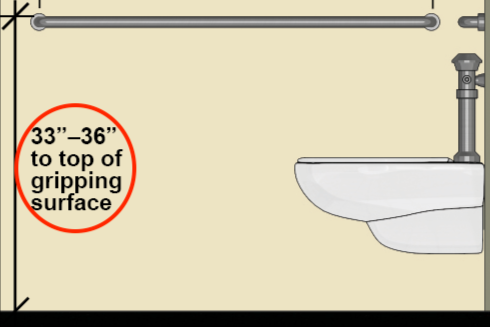
One of the most critical compliance factors for grab bars is height.
2010 ADA Standard Requirements for Toilet Grab Bars:
Grab bars must be installed between 33 and 36 inches above the finished floor (measured to the top of the gripping surface).
This height range ensures:
Comfortable reach for wheelchair users
Proper leverage when standing or sitting
Consistent usability across facilities
⚠️ Even small deviations from the 33”-36” range can lead to non-compliance because construction tolerances are not permitted.
ADA Grab Bar Placement Guidelines
Correct grab bar placement around the toilet is just as important as grab bar height.
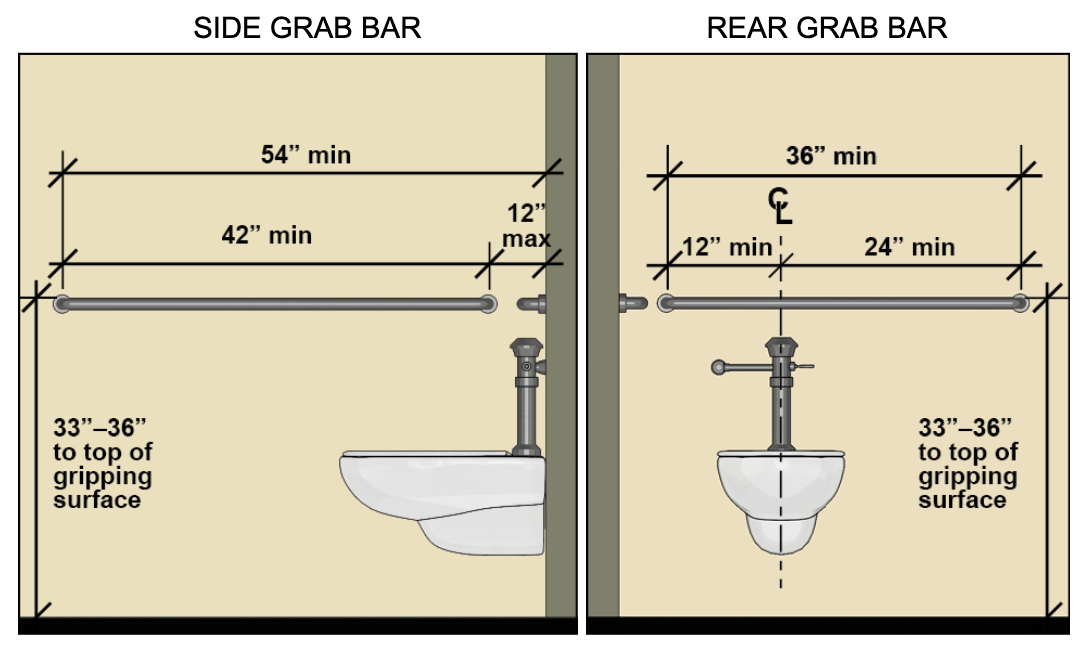
Side Wall Grab Bar (Toilet)
Minimum 42 inches long
Mounted within 12 inches of the rear wall
Extends at least 54 inches from the rear wall
⚠️ California facilities may also be subject to additional accessibility requirements under the California Building Code.
Rear Wall Grab Bar (Toilet)
Minimum 36 inches long
Installed behind the toilet
Placement is based on the toilet position
These placements allow users to safely transfer and stabilize themselves.
Grab Bar Size, Diameter & Clearance Requirements
Grab bars must provide an appropriate gripping surface and sufficient clearance from walls and surrounding objects.
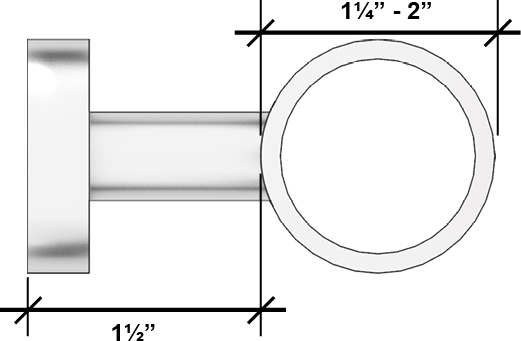
Diameter
For circular grab bars:
Outside diameter must be 1¼ inches minimum to 2 inches maximum
Non-circular grab bars are also permitted when their cross section meets the dimensional requirements established by the ADA Standards.
Wall Clearance
1½ inches between the wall and grab bar
Minimum 1½ inches between the grab bar and projecting objects below and at the ends
Minimum 12 inches between the grab bar and projecting objects above
An exception allows certain shower controls, shower fittings, and other grab bars above to be as close as 1½ inches.
Surface
Grab bars and adjacent surfaces must be free of sharp or abrasive elements
Grab bars must have rounded edges
Grab bars must not rotate within their fittings
These details are critical for usability, especially in wet conditions.
Common ADA Grab Bar Installation Mistakes
Avoid these common issues that can result in noncompliant grab bar installations:
❌ Incorrect Height
Installing grab bars outside the required 33–36 inch range measured to the top of the gripping surface.
❌ Incorrect Placement or Length
Installing side or rear grab bars that are too short or do not extend the required distances from the rear wall or toilet centerline.
❌ Insufficient Structural Strength
Using mounting hardware or supporting construction that does not provide the required structural strength for the complete grab bar installation.
❌ Insufficient Clearance
Installing grab bars too close to walls or surrounding objects, preventing the required gripping clearance.
❌ Improper Grab Bar Size or Design
Using grab bars that do not meet applicable requirements for size, gripping surface, clearance, edges, or resistance to rotation.
Structural Strength & Load Requirements
ADA grab bars and their supporting components must be strong enough to withstand the loads required by the ADA Standards.
Minimum Requirement:
Grab bars, fasteners, mounting devices, and supporting structures must withstand a 250-pound force applied at any point on the grab bar
What This Means for Installation:
Grab bars must be securely mounted to a supporting structure capable of meeting the required load
Fasteners and mounting hardware must be appropriate for the wall construction and installation
The complete installation—not just the grab bar itself—must satisfy the structural-strength requirement
Proper installation is essential to ensure the grab bar performs as intended
How to Improve Grab Bar Compliance
To reduce installation errors and help meet applicable accessibility requirements:
Verify required dimensions before installation, including height, length, placement, and clearances
Account for surrounding fixtures and obstructions that may affect required grab bar clearances
Use grab bars, fasteners, mounting devices, and supporting construction capable of meeting applicable structural-strength requirements
Confirm both federal ADA and California accessibility requirements when working on California facilities
Have accessibility conditions evaluated by a qualified professional when requirements or existing conditions are unclear
For California properties, a Certified Access Specialist (CASp) can evaluate construction-related accessibility conditions and identify issues that may need to be addressed.
ADA Grab Bar Requirements in California
In California, commercial facilities and public accommodations may be subject to both the federal ADA Standards for Accessible Design and accessibility requirements contained in the California Building Code (CBC), Title 24.
California's accessibility provisions include requirements for grab bars in toilet and bathing facilities. While many requirements are similar to the federal ADA Standards, California has additional state-specific accessibility provisions that must also be considered.
The 2025 California Building Code, effective January 1, 2026, contains California's current accessibility provisions in Chapter 11B.
For California projects, both the applicable federal ADA requirements and California accessibility requirements should be evaluated when determining grab bar placement, dimensions, clearances, and installation requirements.
Frequently Asked Questions
-
ADA grab bars are generally installed with the top of the gripping surface between 33 and 36 inches above the finished floor. Specific requirements can vary depending on the type and location of the grab bar.
-
Circular ADA grab bars must have an outside diameter of 1¼ inches minimum to 2 inches maximum. Non-circular grab bars are also permitted when they meet the applicable ADA dimensional requirements.
-
Grab bars, fasteners, mounting devices, and supporting structures must withstand a 250-pound force applied at any point on the grab bar.
-
The space between the wall and the grab bar must be 1½ inches. Additional clearance requirements also apply to projecting objects located above, below, and at the ends of grab bars.
-
Yes. Accessible showers and bathtubs generally require grab bars, with the required configuration depending on the type of bathing fixture and applicable accessibility standards. California facilities may also be subject to additional requirements under the California Building Code.
Final Thoughts
ADA grab bar requirements are an important part of accessible restroom and bathing-facility design. Proper height, placement, dimensions, clearance, gripping surface, and structural strength all contribute to a compliant and usable installation.
For California properties, both the federal ADA Standards and applicable California accessibility requirements should be considered when evaluating or installing grab bars.
If you're planning an installation, alteration, or renovation—or evaluating an existing facility—reviewing accessibility requirements before work begins can help identify potential issues before they become more difficult or costly to correct.
Need Help with ADA Compliance?
Understanding grab bar requirements is only one part of evaluating accessibility at a commercial property. Other features—including parking, accessible routes, entrances, doors, service counters, restrooms, and signage—may also need to be evaluated under applicable federal and California accessibility requirements.
If you need help evaluating accessibility conditions at your property, Proactive Access provides ADA accessibility evaluations and CASp inspections throughout Southern California.
A Certified Access Specialist (CASp) can evaluate construction-related accessibility conditions, document identified barriers, and provide recommendations for corrective action. Qualifying CASp inspections may also provide certain procedural and legal benefits under California law when applicable requirements are satisfied.
Contact Proactive Access for a free estimate for your property.