
ADA Inspection Services for Businesses & Commercial Properties
Proactive Access provides professional ADA inspection services to help businesses, property owners and organizations identify accessibility barriers within their facilities.
During an ADA inspection, our accessibility consultants evaluate applicable areas of your property for compliance with the ADA Standards for Accessible Design. The inspection can identify issues involving accessible parking, routes, entrances, doors, restrooms, service counters, signage and other features used by customers and visitors. After the inspection, you receive a detailed accessibility report documenting the barriers identified, applicable accessibility requirements and recommended corrective actions.
Based in Southern California, Proactive Access provides ADA inspections for commercial properties throughout San Diego, Orange County, Los Angeles, Riverside, San Bernardino and surrounding areas.
What Is an ADA Inspection?
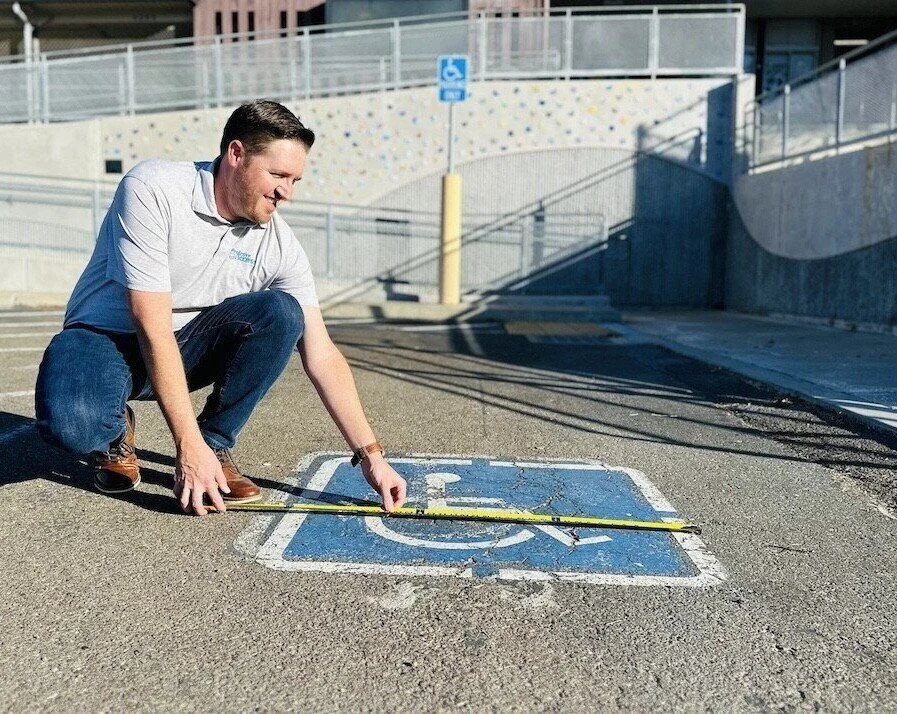
An ADA inspection is an evaluation of a facility's accessible features to identify physical barriers that may affect access for people with disabilities. The inspection focuses on applicable requirements of the Americans with Disabilities Act (ADA), including the ADA Standards for Accessible Design.
During the inspection, an accessibility consultant evaluates applicable areas of the property, which may include accessible parking, exterior routes, entrances, doors, interior routes, restrooms, service counters, dining areas, signage and other features used by customers and visitors.
The conditions observed are documented and compared with applicable accessibility requirements. After the evaluation, the property or business owner receives a written report identifying accessibility barriers and recommended corrective actions.
For California properties, accessibility obligations may also involve state requirements that differ from or exceed federal ADA standards. Property owners who want an evaluation performed under California's Certified Access Specialist program should consider a CASp inspection.
Why Get an ADA Inspection?
An ADA inspection can help property and business owners identify accessibility barriers before those issues create difficulties for customers, interfere with planned improvements or become the subject of an accessibility complaint.
Identify Accessibility Barriers
Accessibility issues are not always obvious. An inspection can identify problems involving accessible parking, routes, entrances, doors, restrooms, service counters, signage and other features throughout the property.
Plan and Prioritize Corrections
A written accessibility report gives you a clearer understanding of the barriers identified at your facility. This information can help you prioritize improvements, coordinate with contractors or design professionals and plan accessibility upgrades as part of future renovations.
Reduce Accessibility Risk
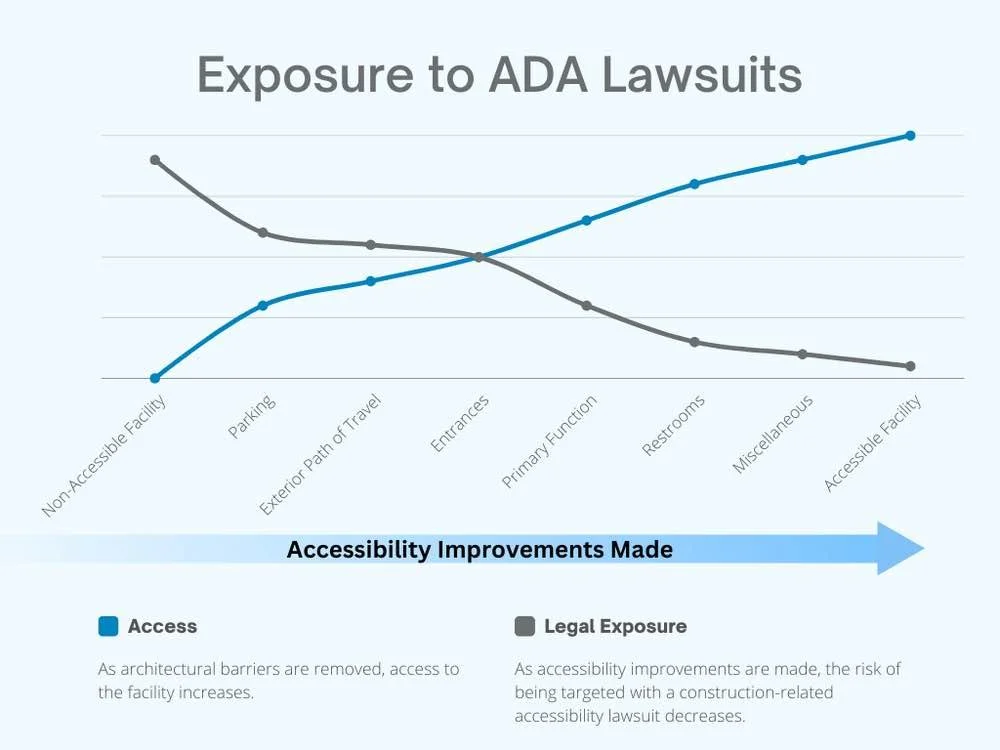
Identifying barriers proactively gives property and business owners an opportunity to address accessibility concerns before they become complaints or disputes. An inspection also creates a documented assessment of the property's accessibility conditions at the time of the evaluation.
Improve Access for Customers and Visitors
Removing physical barriers can make it easier for people with disabilities to independently access your property, goods and services. Improving accessibility can benefit customers, employees, tenants and visitors while creating a more usable facility for everyone.
What ADA Inspectors Look For
An ADA inspection evaluates the accessible features and public areas of a property to identify physical barriers and conditions that may not meet applicable accessibility requirements. The exact scope depends on the type, size and configuration of the facility.
Exterior Accessibility
Accessible Parking — Parking areas are evaluated for the required number and configuration of accessible spaces, including van-accessible parking, access aisles, signage, dimensions, slopes and connections to an accessible route.
Accessible Routes — Exterior routes are evaluated for features such as clear width, running and cross slopes, changes in level, surface conditions, curb ramps and potential obstructions.
Entrances and Doors — Accessible entrances and exterior doors may be evaluated for clearances, thresholds, maneuvering space, opening force, hardware and other accessibility requirements.
Ramps and Changes in Level — Where applicable, ramps and other changes in level are evaluated for slope, landings, handrails, edge protection and related accessible features.
Interior Accessibility
Interior Routes and Doors — Interior circulation paths are evaluated for clear width, maneuvering space, protruding objects, changes in level and accessible door features.
Restrooms — Restrooms may be evaluated for accessible fixtures, clear floor space, turning space, grab bars, toilet accessories, lavatories, mirrors and other required features.
Service and Transaction Counters — Sales, service, reception and transaction areas are evaluated for accessible counter sections and clear floor space where applicable.
Dining and Seating Areas — Restaurants and other facilities with tables, counters or seating may be evaluated for accessible seating locations, knee and toe clearance and accessible routes to those areas.
Signage — Required accessibility signage may be evaluated for location, mounting height, visual characters, tactile characters, Braille and other applicable requirements.
Other Facility-Specific Features — Depending on the property, an inspection may also evaluate drinking fountains, elevators, platform lifts, fitting rooms, guest rooms and other accessibility features.
What You Receive After an ADA Inspection
An ADA inspection gives you more than a list of potential accessibility issues. Proactive Access provides a detailed accessibility report designed to help you understand the conditions identified during the inspection and plan appropriate corrective actions.
Your ADA inspection report includes:
Photographic Documentation — Photos of accessibility barriers and relevant conditions observed during the inspection.
Applicable Accessibility References — References to applicable ADA accessibility requirements associated with the conditions identified.
Measurements and Field Observations — Measurements and documentation of accessibility features evaluated during the inspection.
Barrier Identification — Clear descriptions of accessibility issues identified throughout the property.
Recommended Corrective Actions — Practical recommendations to help you understand how identified accessibility barriers may be addressed.
Plain-English Explanations — Clear explanations that help property and business owners understand the findings without having to interpret technical accessibility standards on their own.
The report can be used to help prioritize accessibility improvements, communicate with contractors or design professionals and develop a practical plan for addressing identified barriers.
ADA Inspection vs. CASp Inspection: What’s the Difference?
Both ADA and CASp inspections evaluate accessibility conditions, but they serve different purposes.
ADA Inspection
An ADA inspection focuses on identifying barriers and evaluating applicable accessibility requirements under the federal Americans with Disabilities Act (ADA). It can help property and business owners understand accessibility issues within their facility and plan appropriate corrections.
CASp Inspection
A CASp inspection is performed by a California Certified Access Specialist (CASp) and evaluates applicable construction-related accessibility requirements, including relevant federal and California standards.
For California property owners, a qualifying CASp inspection may also provide certain legal benefits under state law when the applicable statutory requirements are satisfied.
Which Inspection Do I Need?
If your primary goal is to evaluate your facility for federal ADA accessibility issues, an ADA inspection may meet your needs.
If you own or operate a property in California and want an inspection performed under California's Certified Access Specialist program, including the potential statutory benefits available to qualifying property owners, a CASp inspection may be more appropriate.
Proactive Access provides both ADA and CASp inspections and can help you determine which type of evaluation is appropriate for your property and goals.
How Much Does an ADA Inspection Cost?
The cost of an ADA inspection depends on the size, type and complexity of the property and the scope of the evaluation. Factors such as the number of parking areas, buildings, floors, restrooms and other accessibility features can affect the amount of time required to complete the inspection.
For many small to medium-sized commercial facilities, ADA inspection fees typically range from $800 to $2,000. Larger or more complex properties may require a customized scope and fee.
Proactive Access provides a clear proposal before the inspection so you understand the scope of work and cost before moving forward.
For additional information about inspection fees and the factors that affect pricing, visit our CASp Inspection Cost & Pricing guide.

Schedule Your Inspection
Ready to have your property evaluated? Proactive Access makes it easy to schedule an ADA inspection and understand what to expect before the site visit.
1. Request a Free Estimate
Tell us about your property, including the facility type, approximate size and location. We'll review the information and determine the appropriate scope for your ADA inspection.
2. Review Your Proposal
We'll provide a proposal outlining the inspection scope and fee so you know what to expect before scheduling the site visit.
3. Schedule the On-Site Inspection
Once you're ready to move forward, we'll coordinate a convenient date to evaluate the applicable areas and accessibility features at your property.
4. Receive Your ADA Inspection Report
After the inspection, you'll receive a detailed report documenting the accessibility barriers identified and recommended corrective actions. Reports are typically delivered within 3–5 business days after the inspection.
Frequently Asked Questions
-
An ADA inspection evaluates applicable areas and accessibility features of a property to identify physical barriers that may affect access for people with disabilities. Depending on the facility, the inspection may include parking, accessible routes, entrances, doors, restrooms, service counters, dining areas, signage and other features.
-
For many small to medium-sized commercial facilities, ADA inspection fees typically range from $800 to $2,000. The final cost depends on factors such as the property's size, complexity and scope of the evaluation. Larger or more complex facilities may require a customized fee.
-
Many small to medium-sized facilities can be inspected in one day, although the time required depends on the size and complexity of the property. Proactive Access typically delivers the completed inspection report within 3–5 business days after the site inspection.
-
An ADA inspection identifies accessibility conditions and barriers observed at the property, but the inspection itself does not make a facility compliant. The report can help you understand the issues identified and plan appropriate corrective actions.
-
An ADA inspection focuses on applicable federal accessibility requirements under the Americans with Disabilities Act. A CASp inspection is performed by a California Certified Access Specialist and evaluates applicable construction-related accessibility requirements, including relevant federal and California standards. A qualifying CASp inspection may also provide certain legal benefits under California law when applicable requirements are satisfied.
-
Older buildings can still have accessibility obligations under the ADA. The requirements affecting an existing facility can depend on factors such as alterations, the nature of the barrier and other circumstances. An accessibility inspection can help identify existing barriers and provide information for planning appropriate improvements.