Accessibility professionals can serve very different roles depending on the type of organization, property, and accessibility issue involved. Some focus on organizational ADA policies and programs, while others specialize in evaluating accessibility within buildings and facilities.
An ADA Coordinator typically helps an organization administer ADA-related policies, self-evaluations, transition planning, and ongoing accessibility programs. Other accessibility professionals focus more specifically on construction-related accessibility standards and the built environment.
This article explains several types of accessibility professionals—including ADA Coordinators, accessibility consultants, Texas Registered Accessibility Specialists, and California Certified Access Specialists—and how their roles differ.
Accessibility Consultants
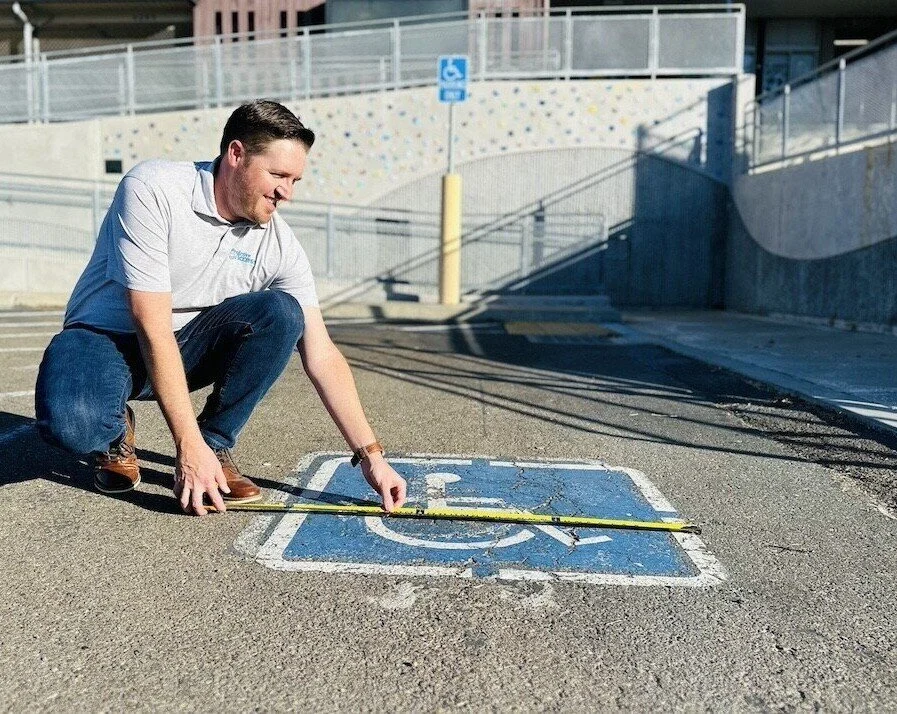
Accessibility consultants may assist businesses, property owners, design professionals, and organizations with understanding accessibility requirements and identifying potential barriers.
Depending on their background and experience, an accessibility consultant may provide services such as facility evaluations, plan reviews, accessibility recommendations, policy guidance, or assistance with barrier-removal planning.
Unlike state-issued professional designations or certifications, the general term “accessibility consultant” does not represent a specific government-issued credential. Experience, qualifications, and scope of services can therefore vary significantly between consultants.
When selecting an accessibility professional, consider whether the individual's qualifications and experience are appropriate for the specific type of accessibility assistance your project requires.
What Is an ADA Coordinator?
An ADA Coordinator helps an organization coordinate its responsibilities under the Americans with Disabilities Act and serves as a point of contact for ADA-related accessibility matters.
Depending on the organization, an ADA Coordinator may be responsible for:
Coordinating ADA policies, procedures, and accessibility initiatives
Responding to accessibility concerns or accommodation requests
Assisting with ADA self-evaluations and transition planning
Coordinating accessibility improvements across facilities, programs, or services
Communicating with employees, members of the public, consultants, and other stakeholders about accessibility matters
ADA Coordinators are particularly important for public entities subject to Title II of the ADA, where federal regulations require certain public entities to designate at least one responsible employee to coordinate ADA compliance efforts.
An ADA Coordinator's role is generally broader than inspecting the physical accessibility of a particular building. The position can involve organizational policies, programs, communications, accommodations, and ongoing accessibility planning in addition to facility-related issues.
Registered Accessibility Specialist (RAS)
A Registered Accessibility Specialist (RAS) is an accessibility professional licensed by the Texas Department of Licensing and Regulation (TDLR) to perform services associated with the Texas Architectural Barriers program.
Depending on the project, a RAS may:
Review construction documents for compliance with applicable Texas accessibility requirement
Perform accessibility inspections of completed construction
Identify accessibility issues related to the Texas Architectural Barriers program
Prepare documentation required as part of the state's accessibility review and inspection process
The RAS designation is specific to Texas and should not be confused with accessibility credentials or programs established by other states. Requirements and professional roles vary by jurisdiction.
Certified Access Specialists in California
California has its own accessibility certification program for Certified Access Specialists (CASps), administered by the California Division of the State Architect. A CASp has demonstrated specialized knowledge of federal and California construction-related accessibility standards.
Unlike an ADA Coordinator, whose role may include organization-wide policies, programs, accommodations, and accessibility planning, a CASp specializes in construction-related accessibility and the built environment.
For a detailed explanation of the CASp credential, certification process, professional role, and qualifications, see our Certified Access Specialist (CASp) guide.
Choosing the Right Accessibility Professional
Choosing the right accessibility professional depends on the type of organization, property, and accessibility assistance you need.
If your organization needs help coordinating ADA policies, accommodations, self-evaluations, transition planning, or ongoing accessibility programs, an ADA Coordinator may be the appropriate resource.
If you need assistance evaluating the physical accessibility of a building or facility, reviewing construction-related accessibility requirements, or identifying barriers in a California property, a professional with specialized expertise in the built environment may be more appropriate.
For California property owners seeking a state-certified professional with specialized knowledge of construction-related accessibility standards, learn more about working with a Certified Access Specialist (CASp).